Looks Fine. Running on Empty.
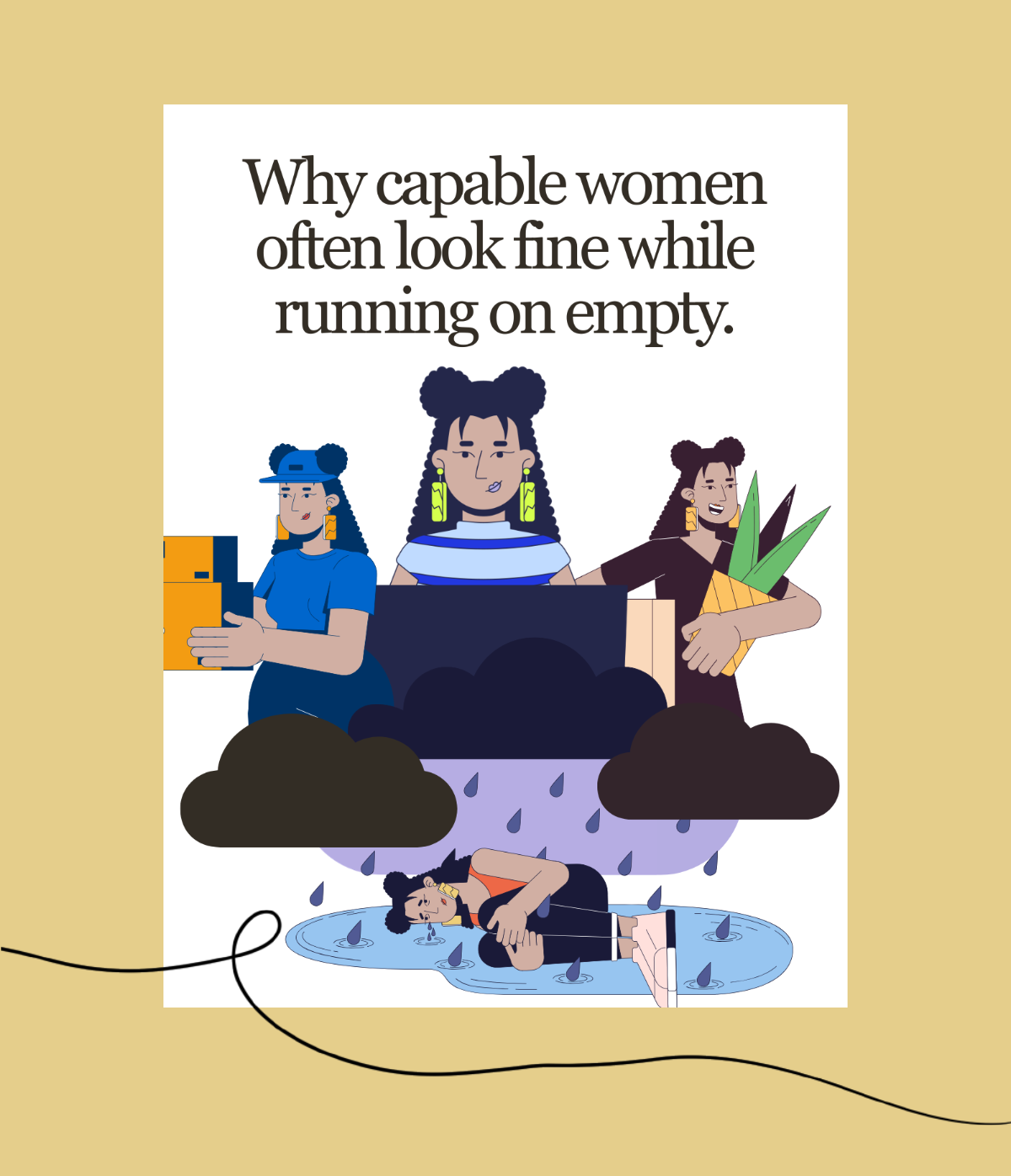
Many high-functioning women look like they're handling everything…
but behind the scenes, they're often carrying the invisible coordination, emotional labor, and mental tracking that keep families, workplaces, and communities running.
This month's article explores the invisible load many women carry, how it impacts mental health, and what can actually help lighten it.
March is Women's History Month, a time often focused on leadership, progress, and achievement.
Those stories matter.
But in clinical practice and organizational settings, another pattern shows up just as consistently: the invisible load many women carry to keep systems functioning.
It rarely looks dramatic.
In fact, it often looks like competence.
Tasks get completed.
People are supported.
Problems get solved.
Which is exactly why the strain is easy to miss.
What the invisible load actually includes
Research on cognitive labor, emotional labor, and mental load shows that much of the strain many women experience comes not from a single task, but from the ongoing responsibility of tracking, anticipating, and coordinating needs for others.
This can include:
remembering appointments, deadlines, and schedules
anticipating emotional needs and smoothing interpersonal dynamics
coordinating caregiving and household logistics
managing academic or behavioral needs for children
monitoring workplace processes and team dynamics
being the person others go to when something goes wrong
Many women describe this as “being the project manager of everyone's life.”
The tasks themselves may seem small.
But the constant mental tracking requires substantial cognitive bandwidth.
This invisible load isn't just emotional. It's cognitive, relational, and
logistical.
Why the strain often goes unnoticed
Women carrying significant mental load often show the opposite of what people expect when someone is struggling.
Instead of visible distress, you may see:
high reliability and competence
careful emotional regulation around others
difficulty asking for help
minimizing their own needs
feeling responsible for maintaining stability
Over time, sustained cognitive load is associated with:
fatigue and brain fog
irritability or emotional flattening
sleep disruption
difficulty concentrating
anxiety and burnout
From the outside, it can look like someone who “has it together.” Internally, it can feel like running a complex system with no off switch.
Signs the invisible load is reaching capacity
For educators, healthcare providers, and organizational leaders, early signals are often subtle.
You may notice:
increased irritability or emotional exhaustion
difficulty initiating tasks despite strong capability
persistent feeling of being “behind”
resentment or withdrawal in relationships
statements like:
“I'm the one who keeps everything running.”
These patterns are often interpreted as time-management problems.
More often, they are load-management problems.
Practical ways to reduce invisible load
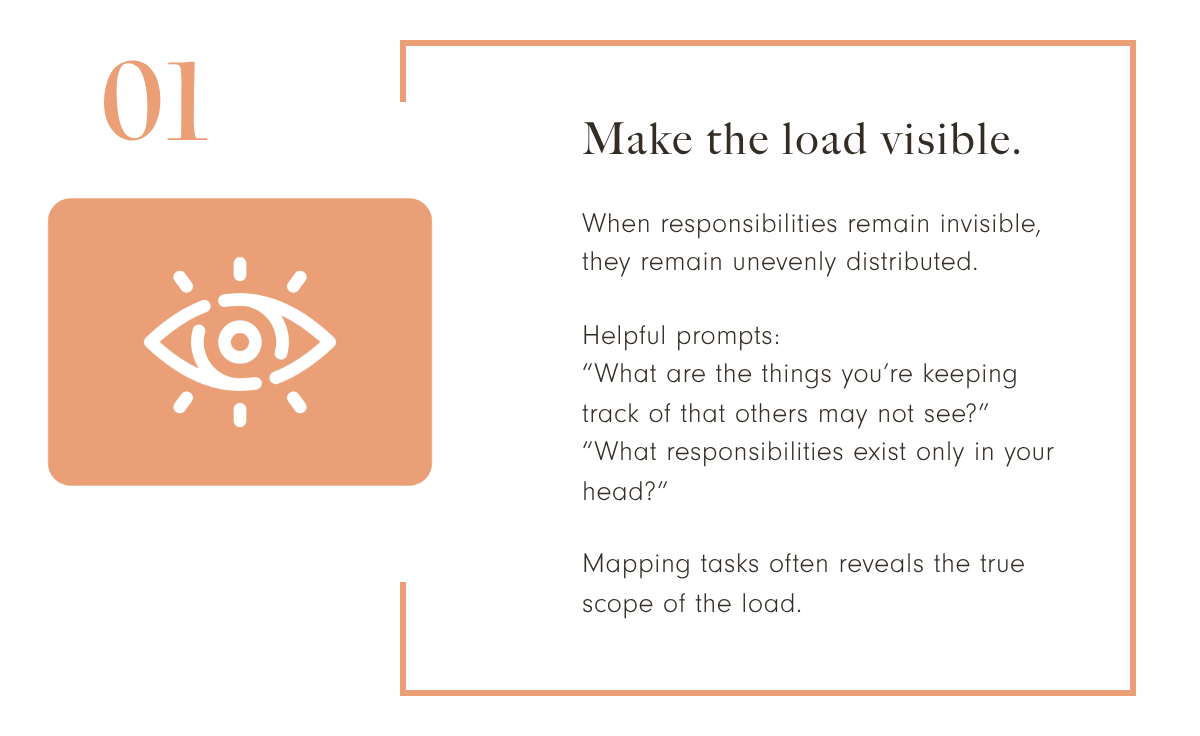
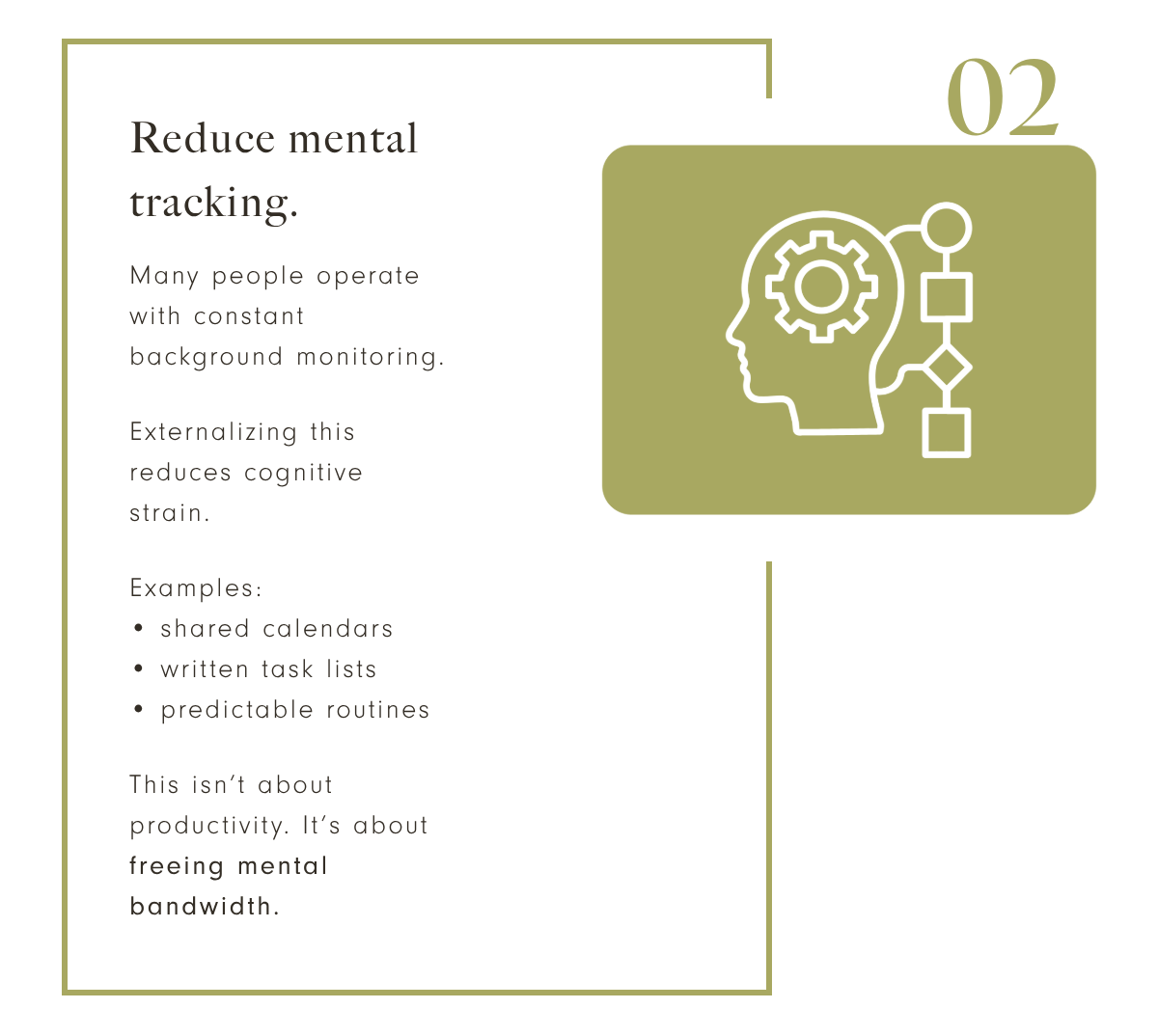
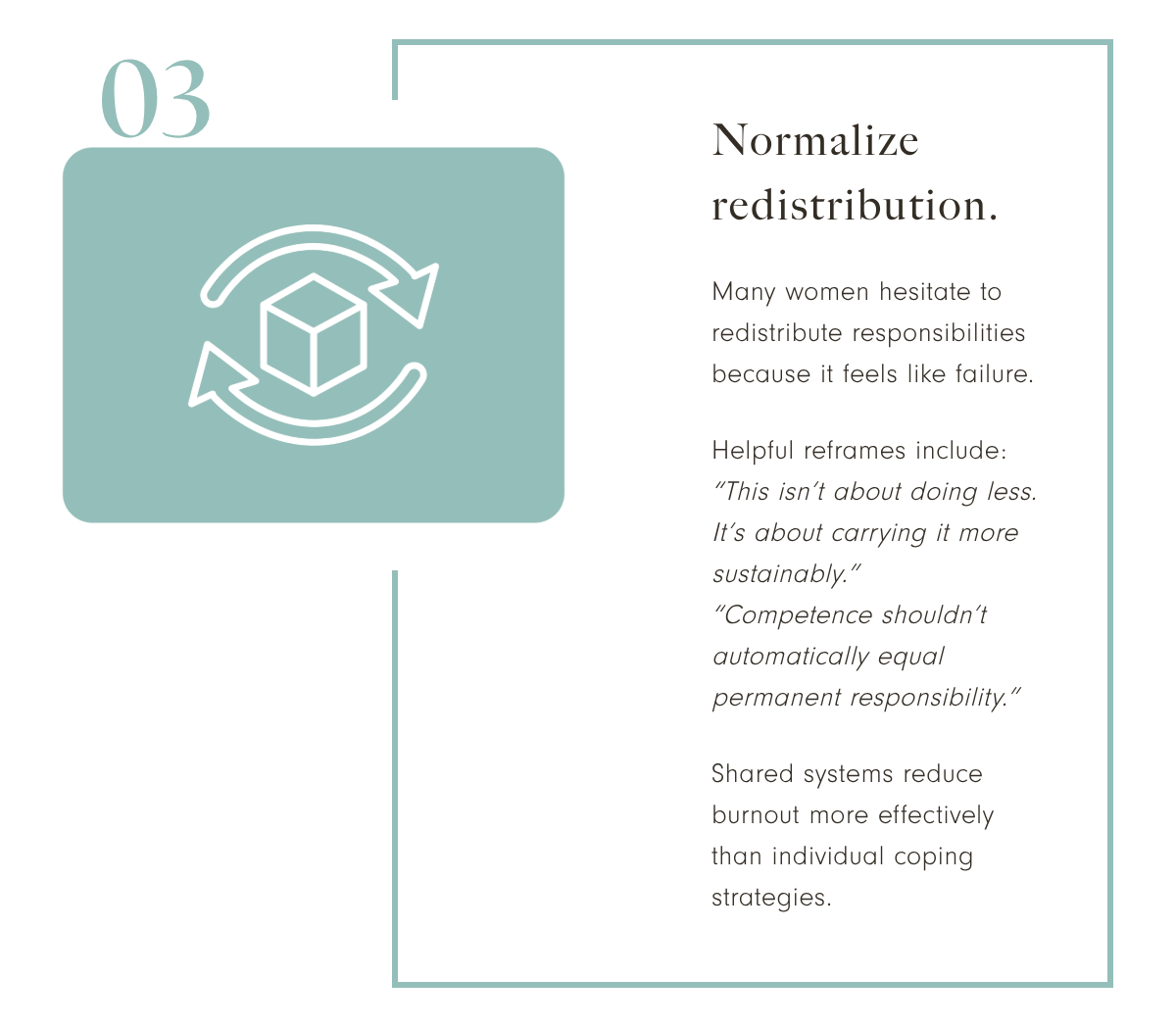
Support works best when it reduces cognitive burden, not just emotional distress. These three approaches consistently help.
The goal isn't perfection.
It's creating systems and support that work in real life.
Why this matters
Recognizing invisible load early can prevent:
burnout
disengagement
mental health decline
family and workplace conflict
Many capable people do not seek help until the load becomes unsustainable.
Small structural adjustments, clearer role distribution, and earlier support can significantly reduce long-term strain.
You may already be thinking of someone you work with who quietly carries more responsibility than anyone realizes.
Supporting women before burnout
If someone you work with seems capable but persistently overwhelmed, a simple question can open the door:
“What are you carrying that other people might not see?”
Naming the load often reduces shame and allows practical support to begin.
If someone appears competent but consistently stretched thin while managing responsibility for everyone else, that's often a good moment to consider additional support.